

Introduction
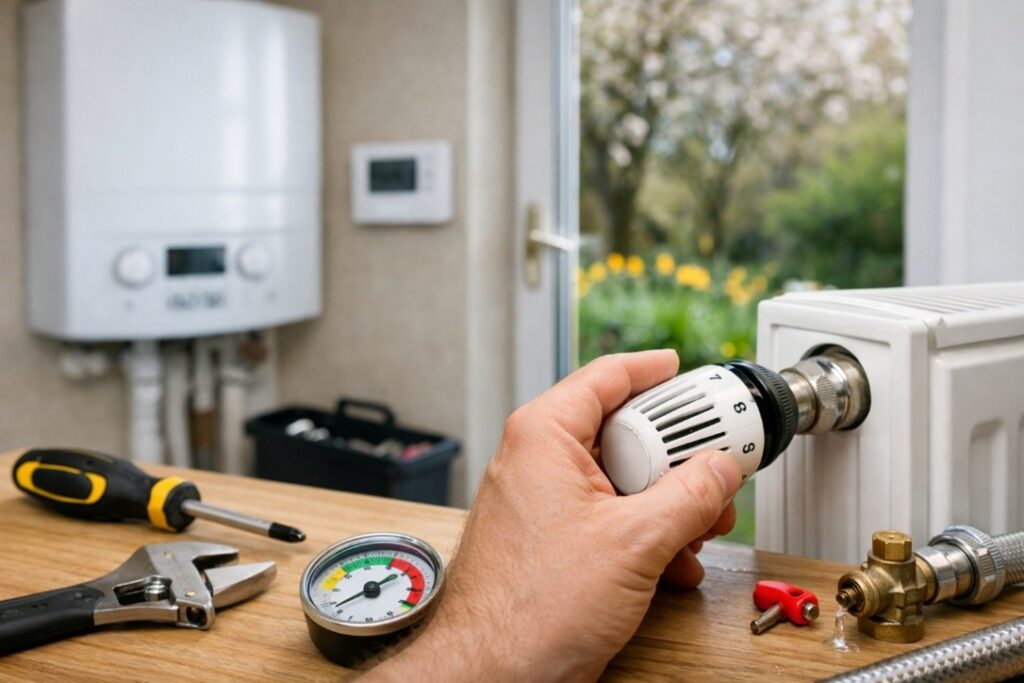
As the days become longer and temperatures begin to rise across the UK, many homeowners naturally start to rely less on their central heating systems. After months of heavy use throughout the colder winter period, spring often marks the point where heating is switched off for extended periods. However, simply turning the system off and forgetting about it is not always the best approach.
Before you stop using your heating altogether, it is worth carrying out a few important checks. These small steps can help ensure your system remains in good condition, prevent problems later in the year and keep your home running efficiently when colder weather eventually returns.
For homeowners across Warwickshire and the surrounding areas, Rheams Plumbing & Heating regularly helps customers maintain and optimise their heating systems throughout the year. Here are some key things to check before you turn your heating off for spring.
Check Your Boiler for Any Warning Signs
Your boiler has likely been working hard over the winter months, so spring is an ideal time to take a moment to check how it is performing. Even if it seems to be operating normally, there may be small signs that something is not quite right.
Look out for unusual noises such as banging, whistling or gurgling sounds when the boiler operates. These can sometimes indicate trapped air, sludge in the system or internal component wear. It is also worth checking the pressure gauge on your boiler. Most systems operate best when the pressure sits between one and two bars.
If you notice frequent pressure drops, visible leaks or error codes appearing on the boiler display, it may be time to have the system checked by a professional heating engineer. Addressing small issues early can help prevent larger and more expensive repairs later.
Bleed Your Radiators
Air can gradually build up inside radiators over the course of winter. When this happens, radiators may develop cold spots, usually towards the top, while the bottom remains warm. This trapped air prevents heat from circulating properly through the system.Bleeding your radiators helps remove this air and allows the system to operate more efficiently. Even if you are planning to turn the heating off for the warmer months, releasing trapped air now can help keep the system balanced and ready for the next heating season.
If multiple radiators have cold spots or the system struggles to heat evenly throughout the house, this may indicate a deeper issue such as sludge build up. In these cases, a professional power flush may be recommended.
Consider Whether Your System Needs a Power Flush
Over time, central heating systems can accumulate rust, debris and sludge inside the pipework and radiators. This build up restricts water flow and reduces the efficiency of the system.
Signs that your system may benefit from a power flush include:
- Radiators taking a long time to heat up
- Certain radiators staying cold while others heat normally
- Discoloured water when bleeding radiators
- Noisy pipes or radiators
- Higher than expected heating bills
Spring can be an ideal time to arrange a power flush because the heating system is used less frequently. Removing sludge from the system helps restore proper circulation and can significantly improve efficiency before the next winter arrives.
Inspect Radiators and Valves
When the heating system is used constantly during winter, small issues with radiators or valves can easily go unnoticed. Once the system is switched off for spring, it is a good opportunity to inspect them more closely.
Check for signs of corrosion, small leaks around radiator valves or damp patches on nearby walls and flooring. Thermostatic radiator valves should also turn freely and respond properly when adjusted.
If any valves are stiff or leaking, they may need replacing. Addressing these issues now is far easier than discovering a problem when the heating needs to be switched back on during colder weather.
Check Your Thermostat Settings
Many households forget to review their thermostat settings once winter ends. Instead of leaving the heating system fully active, adjusting the thermostat can help prevent unnecessary energy use.
In spring, many homeowners prefer to set their heating system to activate only if temperatures drop unexpectedly. Lowering the thermostat setting allows the system to remain available for cooler mornings or evenings without running constantly throughout the day.
Smart thermostats and programmable controls can make this even easier by allowing heating schedules to change automatically as seasons shift.
Book Your Annual Boiler Service
One of the most important steps you can take before turning your heating system off for spring is arranging a boiler service. Annual servicing ensures that the boiler remains safe, efficient and reliable.
During a professional boiler service, a heating engineer will inspect key components, check for wear and tear, clean internal parts where necessary and ensure the system is operating safely. This can also identify small faults before they develop into major problems.
Many homeowners wait until autumn to book their boiler service, but spring can actually be the ideal time. Heating engineers are often less busy than they are during the colder months, and servicing your boiler now means it will be ready to perform efficiently when winter returns.
Think About Future Heating Upgrades
Spring is also a great time to think about improvements to your home heating system. If your boiler is more than ten to fifteen years old, it may be approaching the end of its efficient lifespan.
Modern boilers and heating technologies offer significantly improved energy efficiency compared to older systems. Upgrading your boiler, installing new radiators or exploring options such as underfloor heating or renewable heating systems can all help reduce long term energy costs.
Planning upgrades during the warmer months allows work to be completed without the inconvenience of losing heating during cold weather.
Do Not Ignore Small Problems
One of the most common mistakes homeowners make is assuming that small heating issues can simply wait until winter returns. Unfortunately, problems that seem minor now can often become much more serious if left unresolved for several months.
A dripping valve, pressure drop or noisy radiator might appear insignificant during spring or summer. However, when the heating system is required again during colder temperatures, these issues can quickly escalate into breakdowns.
Taking the time to address these problems early helps keep your heating system reliable and reduces the risk of unexpected repairs.
Expert Heating Support from Rheams Plumbing & Heating
Preparing your heating system for the warmer months does not have to be complicated, but a professional inspection can provide valuable peace of mind. Rheams Plumbing & Heating supports homeowners across Warwickshire with expert boiler servicing, heating system maintenance, power flushing and installations.
Whether your system simply needs a routine check or you are considering upgrading your heating in the future, working with an experienced heating engineer can help ensure your home remains comfortable and energy efficient all year round.
If you would like advice on preparing your heating system for spring or booking a boiler service, the team at Rheams Plumbing & Heating is always happy to help. Taking a proactive approach now can help keep your system running smoothly when you need it most.